
Wherever men and women are persecuted because of their race, religion, or political views, that place must — at that moment — become the center of the universe.
― Elie Wiesel
Claims to human and environmental rights spring from an awareness of needs not yet fulfilled. It may be no surprise, then, that the same is also true of trauma, which originates from unmet needs. These unmet needs constitute our core wounds, and these wounds inform unconscious decisions that can corrode our relationships with others, the Earth, and especially with ourselves - until we change our relationships to the wounds themselves.
To resolve trauma is to first identify which needs within us have not been met, as well as which unconscious decisions we made at the height of our trauma. From there, we can learn how to fulfill in the present these unmet needs of the past, while also rewriting whichever destructive decisions we made at the time that continue to drive our lives. This places us back in the proper position within the mosaic of life, from where we can define our unique purpose unto the world and enact our foremost potential in serving human and environmental justice within it.
First discovering and then meeting unmet needs necessitate careful excavation of repressed content. We proceed gently at your own pace, following your cadence, while respecting the signals of your soma. This is not an extractive industry to unearth buried horrors within you; rather, this is a mindful, consent-based practice of integrating the psycho-spiritual, embodied excesses of your life so that you can free yourself from their bondage. The technologies we use to do so will vary according to your unique needs in the moment, and may include breathwork, plant wisdom, interdimensional forensics, and mapping of incarnational memories.
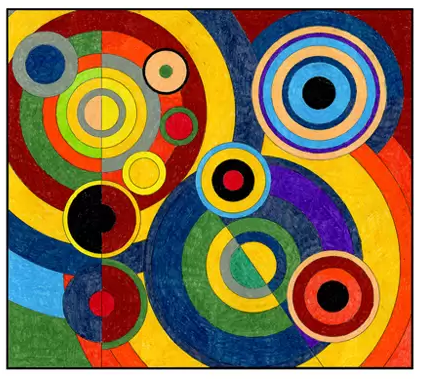
"Joie de Vivre" by Robert Delaunay, 1930